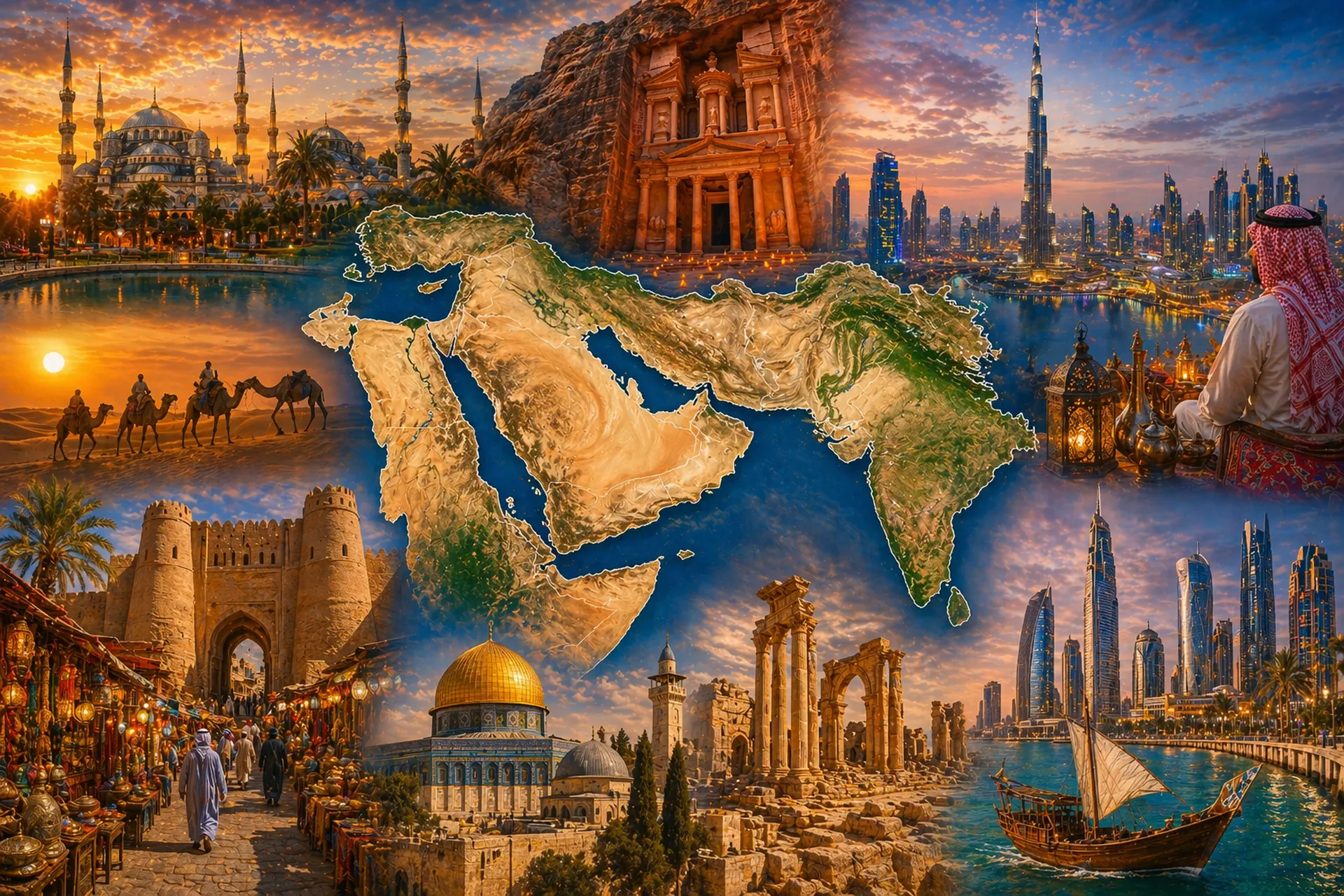
This comprehensive Middle East travel guide unveils a region steeped in ancient history, vibrant cultures, and breathtaking landscapes. From the futuristic skylines of Dubai to the timeless ruins of Petra and the sacred cities of Jerusalem and Mecca, the Middle East offers a unique blend of tradition and modernity. Ideal for travelers interested in cultural tourism, desert adventures, and historical exploration, it is a top destination for unforgettable experiences.
Whether you’re planning a journey through the United Arab Emirates, Jordan, Israel, or Saudi Arabia, this guide provides essential insights on the best places to visit in the Middle East, local customs, and culinary delights. Discover the best time to visit the Middle East, practical safety tips, visa requirements, and budget advice to help you confidently navigate this fascinating and diverse region.
History & Culture
The Middle East’s history and culture are among the world’s richest, shaped by ancient civilizations like the Babylonians, Persians, and Arabs. Iconic landmarks such as the Pyramids of Giza, the Ancient City of Petra, and the Dome of the Rock tell stories of religious significance and human achievement.
Cultural traditions, including vibrant festivals, music, and art, are deeply rooted in the region. From traditional souks to modern museums, the Middle East invites travelers to experience its heritage through both ancient rituals and contemporary expressions.
Exploration & Adventure
Adventure seekers will find plenty in the Middle East, from desert safaris in the Dubai dunes to hiking the Wadi Rum in Jordan and scuba diving in the Red Sea. The region’s diverse landscapes offer thrilling outdoor experiences year-round.
Explore vast deserts, ancient ruins, and vibrant cities with ease. Whether camel trekking, hot air ballooning, or exploring archaeological sites, adventure travel in the Middle East offers unique ways to connect with nature and history.
Flavors & Culinary
The Middle East cuisine is a vibrant fusion of ancient traditions and diverse cultural influences, featuring flavorful spices, fresh herbs, and wholesome ingredients. Dishes like hummus, falafel, shawarma, kebabs, and tabbouleh are staples that highlight the region’s rich culinary heritage. From street food stalls to elegant restaurants, the variety of flavors offers something for every palate, making Middle Eastern food tourism a must for visitors.
Food markets, or souks, are perfect places to taste authentic dishes and discover local specialties. The region also boasts exquisite desserts such as baklava and kunafa, paired with traditional drinks like mint tea and Arabic coffee. Culinary festivals and cooking classes provide immersive ways to explore Middle Eastern gastronomy beyond the plate, connecting travelers to the region’s history and culture through food.
What to Know
Best Time to Visit
The best time to visit the Middle East is from October to April, when mild temperatures make sightseeing, desert tours, and cultural visits comfortable. Summers can be extremely hot, especially in the Arabian Peninsula, with temperatures exceeding 40°C (104°F), making outdoor activities challenging during this season.
Traveling during Ramadan offers a unique cultural experience, but be aware that many restaurants and shops operate on limited hours. Planning your trip around these seasonal and cultural variations ensures the best overall experience in the region.
Safety and Health Advice
Most popular tourist destinations in the Middle East are safe, but travelers should remain aware of local conditions and avoid restricted or sensitive areas. Respecting cultural norms, dress codes, and local laws enhances safety and helps ensure a positive experience while traveling.
Healthcare quality varies by country; major cities typically have good facilities, while rural areas may have limited access. Comprehensive travel insurance is recommended, and staying hydrated and sun-protected during desert excursions is essential for health.
Entry Requirements and Visas
Visa policies in the Middle East vary by country and nationality. Many destinations offer e-visa or visa-on-arrival options, but some require advance visa applications through embassies or consulates. Always verify the entry requirements for your nationality before travel.
Ensure your passport has at least six months’ validity beyond your planned entry date. Carry all necessary travel documents and stay informed about each country’s immigration policies to avoid entry issues at borders.
Travel Costs and Budget Tips
The cost of traveling in the Middle East varies widely. Luxury hubs like Dubai and Abu Dhabi are known for high prices in accommodation and dining, while countries such as Jordan and Egypt offer more affordable options for budget travelers.
To save money, use local transportation, eat at traditional markets, and book accommodations and tours in advance. Understanding the cost of travel in the Middle East helps you plan an enjoyable trip that fits your budget without missing key experiences.